
Tailored HR Solutions as Unique as Your Business
Expert consulting and service to elevate your HR from a headache to a value driver.
Does Your HR Function Make the Grade?
Take our 5-minute quiz and evaluate the effectiveness of your HR function.

How We Help
We Focus on Your HR Needs,
So You Can Focus on Your Mission.
At Quantum Strategies, we understand that effective human resource management is the cornerstone of every successful business, regardless of size. Our mission is to provide tailored HR solutions that align perfectly with your unique business needs and growth stage.
Our Services
Navigating Change with Confidence: Quantum Expert HR Solutions
From Policy Assistance to Leadership Succession Planning, Quantum Strategies is Your Ultimate HR Resource to Solve Your Business Challenges.
HR Operational
Assessments
Unlock the full potential of your HR department. Our collaborative approach brings clarity and efficiency to your HR operations, providing a thorough analysis of your department's structure, costs, effectiveness, and needs.
Comprehensive Analysis: Detailed evaluation of your organization, workgroups, and individual roles for optimized efficiency.
Objective Insights: Receive a clear blueprint highlighting your HR department's strengths, weaknesses, and gaps.
Strategic Recommendations: Actionable plans focusing on technology utilization, communication enhancement, and leveraging department strengths.
HR Consulting and Managed Services
Tailored to align with your unique needs, our HR consulting and managed services enhance operational efficiency and effectiveness, allowing you to focus on your core mission while we optimize your HR investment.
Expert Supplemental Support: Strengthen your existing HR team with specialized expertise to navigate complex HR landscapes.
Personalized, Agile Solutions: Customized services for organizations with or without HR teams, adaptable to your specific requirements.
Goal-Oriented, Clear Communication: Delivering precise, actionable strategies that align with your organization’s goals and ensure successful execution.
Custom HRIS Design and Integration
Revolutionize your HR data management. Our team will evaluate your current human resources technology stack, offer recommendations, and then integrate your new and existing systems with our cutting-edge technology, ensuring seamless data flow and optimized operational efficiency.
Seamless Integration: Connect legacy systems with modern platforms for streamlined data management.
Tailored Design: Custom HRIS solutions uniquely crafted to meet your specific business needs.
Advanced Analytics: Leverage data-driven insights for strategic decision-making and operational excellence.
“Successfully steering through the specialized HR challenges within organizations of all kinds demands expert understanding, strategic planning, and precise implementation. With comprehensive knowledge of these challenges and the right solutions, your business can stay focused and successful in their vital missions.”
William J. Rizzo

Who we Are.
We Focus on Your HR Needs,
So You Can Focus on Your Mission.
At Quantum Strategies, we recognize that proficient management of human resources is fundamental to the success of any enterprise, irrespective of its scale. Our objective is to deliver customized human resource solutions that are in perfect harmony with your distinct business requirements and developmental phase.
Constant Improvement
Commitment to Customers
High Level Of Knowledge
Best Service You Can Get



Why Choose Us
A True Partner to Solve Your Most Complex HR Challenges.
Empowering HR Innovation and Compliance
Commitment to 100% Client Satisfaction
People-First Approach

Peace of Mind:
Handle ongoing compliance with ease

Employee Satisfaction:
Build a positive workplace with engaged employees

Strategic Confidence:
Drive strategy with advanced analytics

Leadership Development:
Equip your team with the tools to lead

2,245 +
Happy Clients

25 +
Years Of Experience

120 +
Professional Team
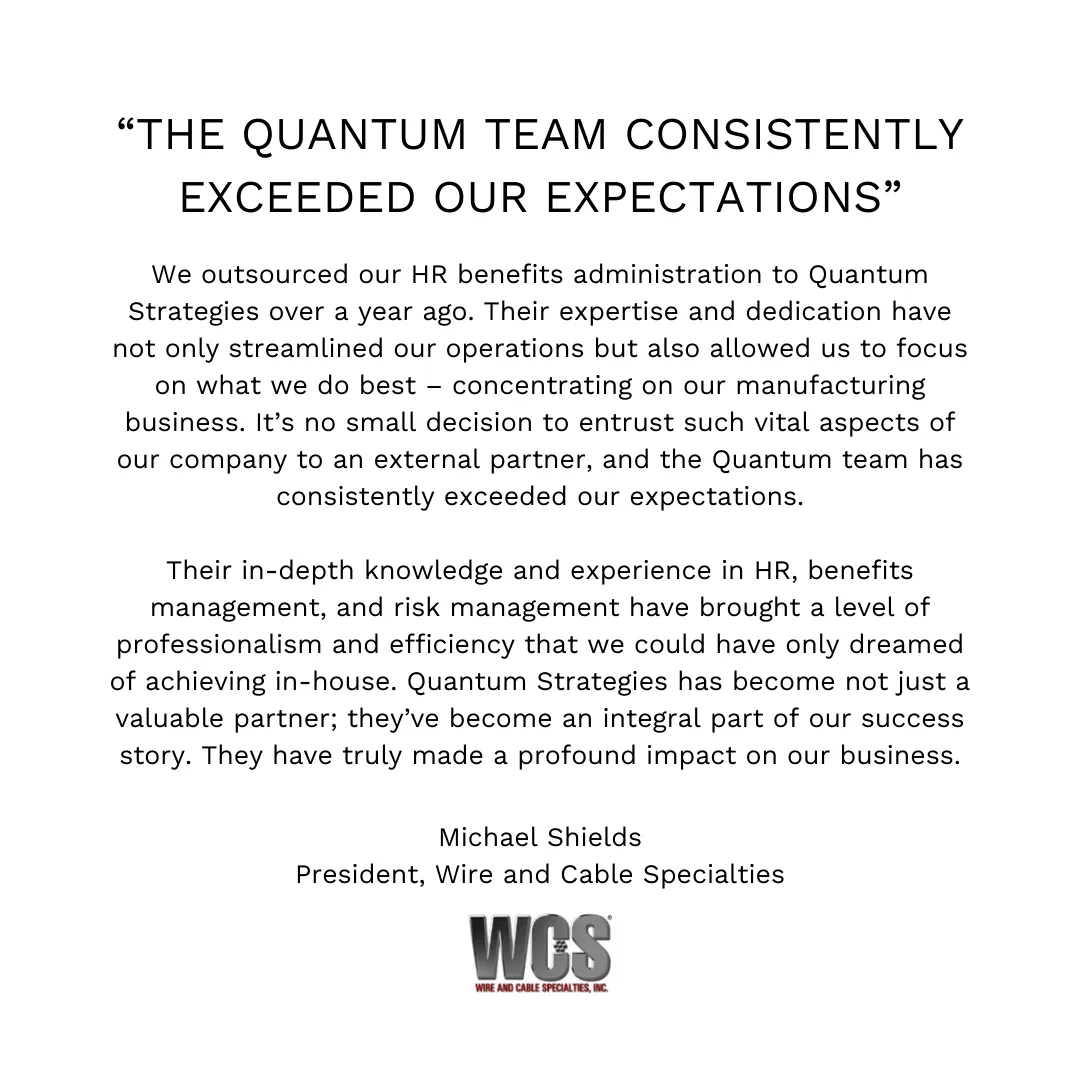
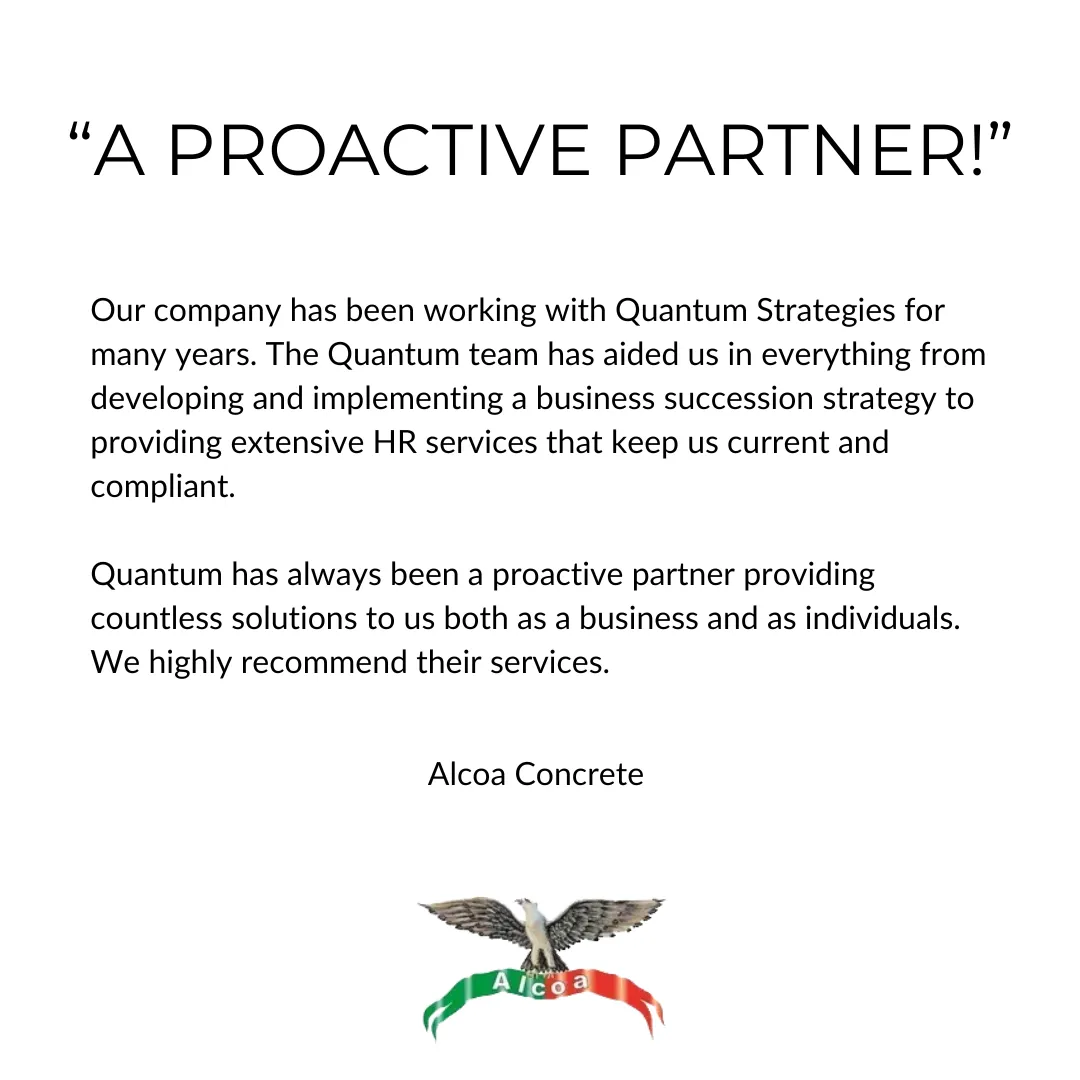
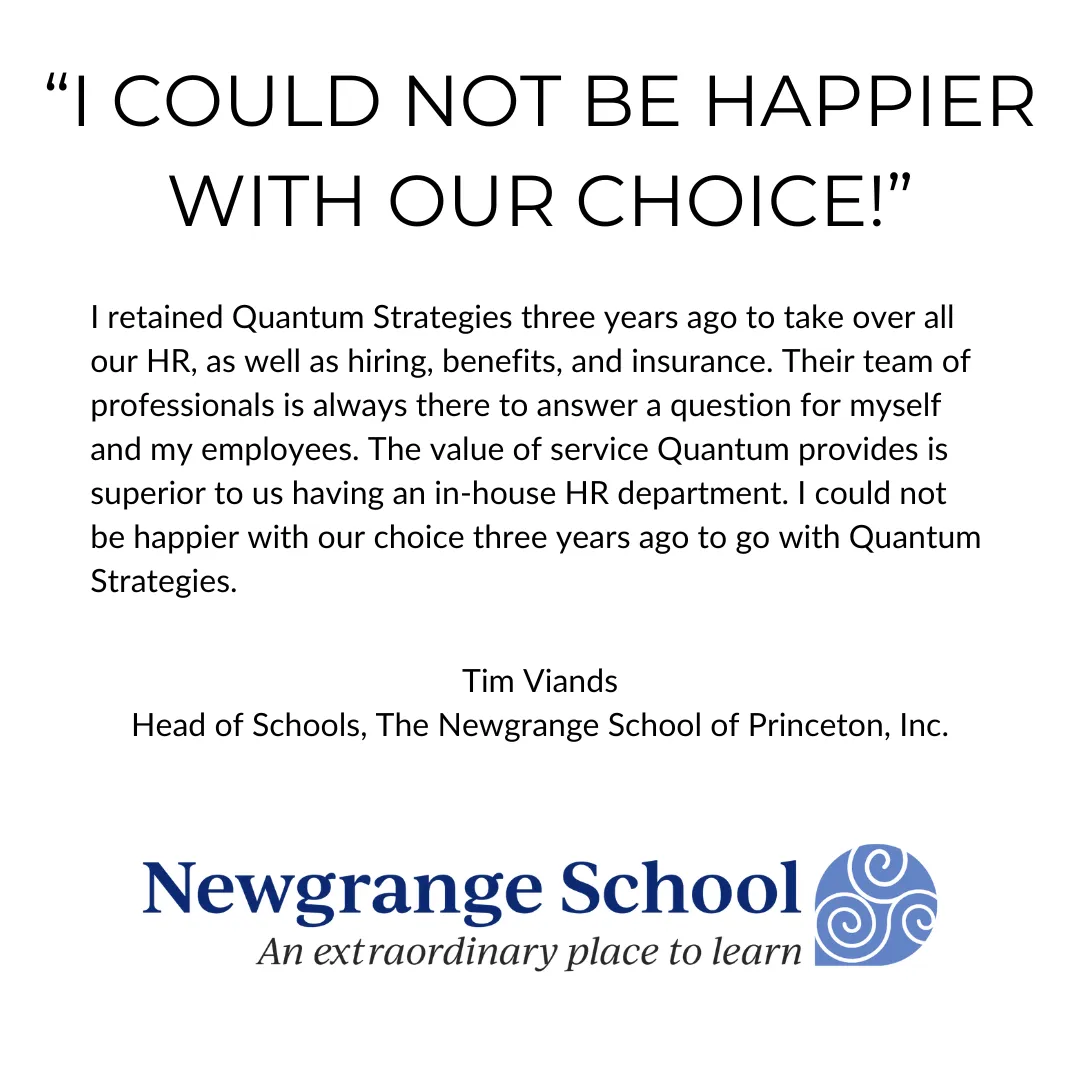
Testimonials
The Quantum Commitment - 100% CLIENT SATISFACTION!
At Quantum, we understand that your satisfaction matters most, and The Quantum Commitment is our way of putting that understanding into action. Experience the difference with a team that is dedicated to making your satisfaction the cornerstone of our service. Because when you choose Quantum, you choose excellence, reliability, and a commitment to exceeding your expectations every time.
Our Resources
Unveiling Proven Strategies and Insights.
Discover actionable tips, expert advice, and industry insights to fuel your journey towards success.


Fostering a Psychologically Safe Workspace
As we navigate the complexities of the post-pandemic world, the importance of mental health in the workplace has surged to unprecedented levels. According to research from the
American Psychological Association, 81% of employees are now actively seeking workplaces prioritizing mental well-being.

Key Challenges Faced by Human Resources in Nonprofit Organizations
The nonprofit sector brings its own set of specialized difficulties, especially in the area of human resources (HR). Although these difficulties may share some common ground with those in the for-profit industry, they possess unique characteristics that require special attention from nonprofit leaders.

Maximizing Business Performance with HR Analytics: Harnessing Data-Driven Insights for Effective People Management
HR analytics involves collecting, analyzing, and reporting data related to human resource management within an organization.
FOUND THESE HELPFUL?
Explore Additional Articles and Resources In Our Blog

HR Analytics: Turn Workforce Data Into Strategic Decisions
Most HR teams have an abundance of data, including employee records, turnover statistics, hiring metrics, and performance reviews. However, many organizations still struggle to apply proper analysis, such as understanding why employees are leaving or where talent investments will have the greatest impact.
In consulting, an organization was experiencing 15% turnover but had no clear understanding of the cause. After analyzing the data, we discovered that young employees depart after 18 months due to a lack of career development opportunities.
HR analytics transforms raw data into strategic insights that improve hiring, retention, performance, and planning. This guide explores what HR analytics is, why it matters, how to implement it, and which metrics drive business decisions.
What Is HR Analytics?
Definition and Scope
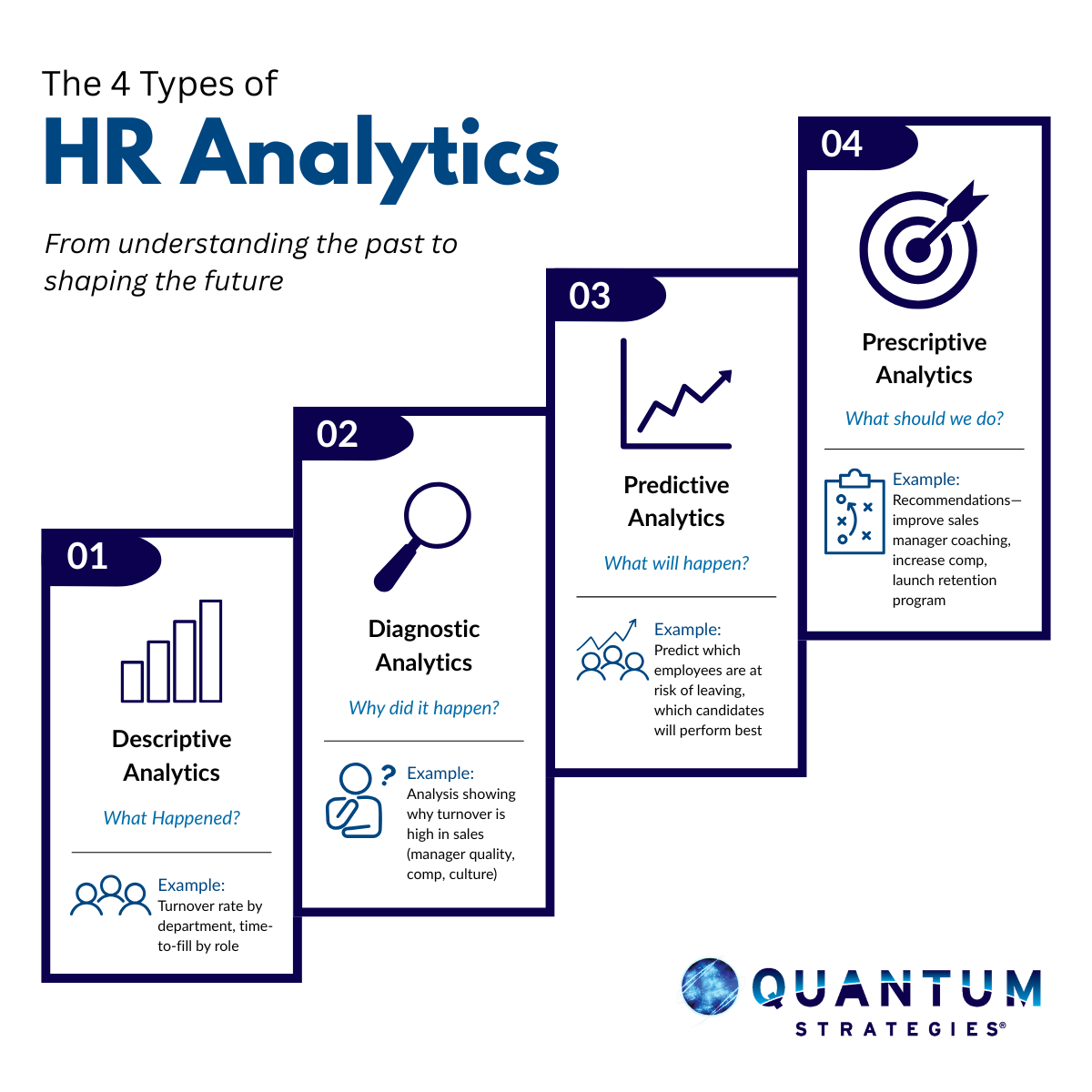
HR analytics uses data and statistical analysis to understand workforce trends, identify patterns, and predict outcomes. For example, reporting may indicate that turnover is 15%, while HR analytics reveals that 80% of departures are among younger employees who cite limited career development opportunities as a primary reason for leaving.
HR Analytics vs. HR Reporting
HR analytics focuses on insights, patterns, predictions, and recommendations. In contrast, HR reporting focuses on dashboards, metrics, and historical data. For example, reporting may indicate that 50 individuals were hired this year, while analytics reveals that the quality of hire decreased 20% when new recruiting channels were added—time-to-fill improved, but early turnover doubled.
Why Most HR Analytics Efforts Fail
Problem 1: Poor Data Quality
Employee records may be incomplete, inconsistent, or duplicated, and job titles may not match across systems.
Problem 2: Lack of Clear Business Questions
Analytics without direction wastes time. Instead of asking what insights can be drawn from data, organizations should focus on specific business questions, such as why turnover is high in a department.
Problem 3: Analytics Without Action
Teams analyze data and present findings, but no meaningful action follows, leaving insights buried in PowerPoint decks.
Problem 4: Tracking the Wrong Metrics
Too much emphasis is placed on activities, such as the number of hires or training sessions, instead of outcomes such as quality of hire, retention, and performance.
Problem 5: Lack of Analytics Expertise in HR
HR teams often lack training in statistics, data science, and analysis. While some organizations hire data analysts, they often lack an HR business context.
The Business Case for HR Analytics
HR's Credibility Problem
Leadership views HR as transactional rather than strategic; therefore, HR struggles to demonstrate business impact. For example, an HR team may launch a $500K engagement initiative, yet struggle to measure its impact on retention or performance.
What Analytics Solves
Analytics helps HR prove ROI by linking investments to business outcomes and identifying trends before they become crises. In addition, it improves talent investments and decision-making.
Financial Impact of HR Analytics
Companies using HR analytics can experience 14% higher employee retention, 22% higher productivity, and 25% better quality of hire. According to SHRM, a positive workplace culture plays a key role in employee retention, highlighting the value of using data to improve workforce outcomes and support long-term business performance.
Foundation: Get Your Data House in Order
Data Quality Is Everything
Start with clean, complete, and consistent HRIS data. Key audit questions include whether employee records are complete and accurate, free of duplicates, and consistent across systems.
Establish Data Governance
Define who owns and can edit employee data, and how it is maintained. In addition, organizations should set rules, assign data stewards across functions, and conduct regular audits.
Integrate Your Systems
Employee data is often scattered across HRIS, ATS, payroll, and performance systems. Organizations planning new technology investments should establish a strong HRIS foundation to support reporting and analytics.
Create a Data Warehouse
Small organizations can use their HRIS as the primary data source. Mid-size organizations benefit from a data warehouse, while enterprise organizations typically require a full data stack. Organizations should explore implementation support through a custom HRIS design service.
Key HR Analytics Metrics That Drive Decisions
Recruiting and Hiring Analytics
Recruiting and hiring analytics include metrics such as time-to-fill, cost-per-hire, quality of hire, offer acceptance rate, early attrition, diversity of hire, and yield rate. For example, one recruiting source brings candidates at $2K per hire with 85% one-year retention, while another costs $5K per hire with 60% retention; therefore, the budget should be shifted to the more cost-effective source.
Retention and Turnover Analytics
Retention and turnover analytics include metrics such as overall turnover rate, voluntary versus involuntary turnover, turnover by department, role, tenure, or manager, and regrettable versus unregrettable turnover. In addition, organizations may analyze exit interview data, survival curves, and turnover costs.
Performance and Productivity Analytics
Performance and productivity analytics include metrics such as performance distribution, manager effectiveness, productivity per employee, and manager span of control. For example, teams with managers who conduct monthly 1-on-1s have 25% higher engagement and 30% lower turnover.
Compensation and Equity Analytics
Compensation and equity analytics include metrics such as pay equity, market competitiveness, pay progression, and bonus distribution. For example, women in sales roles earn 8% less than men with the same tenure and performance, which requires a $200K investment to correct, reducing legal risk and improving retention.
Engagement and Culture Analytics
Engagement and culture analytics include engagement survey scores, connection scores, and psychological safety, often analyzed by department, tenure, and demographics. Departments with the highest psychological safety scores have the lowest turnover and the highest performance ratings.
Workforce Planning Analytics
Workforce planning analytics include skills inventory, succession readiness, tenure distribution, and internal mobility. For example, only 20% of leaders are promoted internally, indicating a need to develop more high-potential talent and implement a leadership development program to reach a 50% internal promotion rate.
How to Implement HR Analytics
Step 1: Define Business Questions
Start by defining business questions, focusing on the decisions leadership is struggling with. Select 3-5 questions to prioritize and avoid trying to analyze everything at once.
Step 2: Audit Current Data
Review the data you currently have across HRIS, ATS, payroll, performance, and surveys. Assess whether the data quality is strong enough for analysis and whether you can pull data across systems. An HR operational assessment can help identify areas for improvement before launching analytics initiatives.
Step 3: Build Analytics Team
Organizations should hire a data analyst with HR knowledge, train an existing HR team member in analytics tools, or partner with a consultant. An HR business partner defines questions, a data analyst runs the analysis, and an HR leader drives action.
Step 4: Select Analytics Tools
Start with HRIS reporting and a basic BI tool, then scale to a data warehouse as analytics maturity increases. For enterprise-scale needs, a data warehouse can centralize data across all HR systems.
Step 5: Clean and Prepare Data
Dedicate 1-2 months to cleaning data before analysis begins. In addition, create a data dictionary and establish data governance rules.
Step 6: Build Analytics Dashboard
Start simple with 5-10 key metrics that leadership cares about. In addition, update dashboards regularly and include trend lines to identify whether performance is improving or declining.
Step 7: Turn Insights into Action
Conduct monthly reviews to identify insights and define appropriate actions. In addition, correlate findings to business objectives and measure the impact of actions.
Best Practices for HR Analytics Success
Scale Gradually
Start with a simple dashboard of 5-10 critical metrics, then mature over 1-2 years into more advanced predictive analytics.
Benchmark Against Industry and Peers
Metrics only provide meaningful insights when interpreted within the context of industry benchmarks. According to Deloitte, metrics that benchmark an organization’s status against peers can help leaders understand where they stand today. For example, a 15% turnover rate may be slightly above the 13% industry average in tech, while a 20% sales turnover rate may be significantly higher than average.
Tell Stories with Data
Correlate data to business impact, such as turnover costing $2M annually, with a $300K investment in a career framework delivering a 6.7x ROI in Year 1.
Empower Non-Analysts with Self-Service Analytics
Managers and HR leaders should be able to access dashboards directly and filter by department, role, and time period. Users should also be trained to ask questions and interpret data.
Protect Privacy While Maintaining Transparency
Data used for analysis should be de-identified, and dashboards shared with employees should be anonymized. All practices should comply with data protection regulations.
Review and Improve
Conduct quarterly reviews to assess whether current metrics are relevant and identify new questions that have emerged. In addition, update dashboards and retire metrics that are no longer useful.
Common HR Analytics Mistakes
Mistake 1: Poor Data Quality
Poor data quality leads to unreliable conclusions. Organizations should invest in data cleanup and governance before analytics.
Mistake 2: Analyzing Without a Clear Question
Analyzing data without a clear question produces insights with little value. Organizations should start with specific business questions and use analytics to find the answers.
Mistake 3: Insights Without Action
Insights have little value if they do not lead to change. Organizations should build accountability by defining appropriate actions.
Mistake 4: Over-Interpreting Correlation
Correlation does not always indicate causation. Organizations should search for confounding variables and avoid drawing conclusions.
Mistake 5: Ignoring Context
Metrics without context can lead to misleading conclusions. Organizations should segment data by factors such as department, manager, or role, to better understand the drivers.
Mistake 6: Not Involving HR in Analytics
Analytics is most effective when combined with HR expertise. A close partnership between analysts and HR business partners helps ensure the right metrics are measured and insights are interpreted accurately.
Predictive HR Analytics
What is Predictive HR Analytics?
Predictive HR analytics uses historical data to predict future outcomes. Common applications include predicting which employees are likely to leave within the next six months, identifying candidates most likely to succeed, and determining which employees are ready for promotion.
Predicting Turnover Risk
Organizations should use data from past employee departures to identify turnover patterns. These insights support targeted interventions, such as development planning, engagement conversations, and retention strategies.
Predicting Quality of Hire
Organizations should use data from successful hires to identify characteristics associated with high performance. For example, if a model indicates that candidates from Ivy League schools outperform others by 15%, the recruiting strategy is adjusted accordingly.
Challenges of Predictive Analytics
Predictive analytics requires significant data, such as years of history and hundreds of examples, along with statistical expertise. Organizations should start with descriptive and diagnostic analytics before moving into predictive analytics.
Real-World Example: HR Analytics Transformation
A 1,200-employee manufacturing company faced 18% turnover but lacked clear insight and leadership trust in HR data. An HR analytics program was implemented, including data cleanup, dashboards, and monthly analytics reviews.
Analysis by plant and role revealed Plant 2 had 28% turnover vs. 12% at Plant 1, driven by manager effectiveness and lack of career development. After targeted coaching and a career framework pilot, turnover dropped to 14% overall and saved over $2M, increasing data-driven decision-making across leadership.
HR Analytics Tools and Platforms
Entry-Level
Entry-level tools for small organizations include HRIS built-in reporting and Google Sheets with formulas, typically costing $0 to $5K per year.
Mid-Market
Mid-market tools include BI (Business Intelligence), HR-specific platforms, and data integration tools, typically costing $10K to $50K per year.
Enterprise
Enterprise tools include data warehouses, advanced BI, predictive analytics, and HR platforms with built-in analytics, typically costing $100K+ per year.
Build vs. Buy
Buy when speed is important, managed solutions are preferred, or analytics is not a core business function. In contrast, build when requirements are complex, full control is needed, or scale justifies the investment.
Conclusion: Turning Data into Insight and Insight into Action
HR analytics transforms data into strategic decisions by helping organizations hire better, retain more talent, develop employees faster, and improve overall performance. Key success factors include quality data, clear business questions, analytics expertise, committed leadership, and action on insights.
Ready to build an HR analytics capability? Quantum Strategies helps organizations clean data, build analytics infrastructure, and turn insights into action. Contact us to schedule a consultation.

Connect


Keep Up with Our Latest News and Insights
Subscribe to Quantum Strategies' latest updates and insights.
Office: Philadelphia, PA | Glen Mills, PA | Washington, DC
Call 610.624.1770
Email: info@QS2500.com
Site: www.QS2500.com