Tailored HR Solutions as Unique as Your Business
Expert consulting and service to elevate your HR from a headache to a value driver.
Does Your HR Function Make the Grade?
Take our 5-minute quiz and evaluate the effectiveness of your HR function.

How We Help
We Focus on Your HR Needs,
So You Can Focus on Your Mission.
At Quantum Strategies, we understand that effective human resource management is the cornerstone of every successful business, regardless of size. Our mission is to provide tailored HR solutions that align perfectly with your unique business needs and growth stage.
Our Services
Navigating Change with Confidence: Quantum Expert HR Solutions
From Policy Assistance to Leadership Succession Planning, Quantum Strategies is Your Ultimate HR Resource to Solve Your Business Challenges.
HR Operational
Assessments
Unlock the full potential of your HR department. Our collaborative approach brings clarity and efficiency to your HR operations, providing a thorough analysis of your department's structure, costs, effectiveness, and needs.
Comprehensive Analysis: Detailed evaluation of your organization, workgroups, and individual roles for optimized efficiency.
Objective Insights: Receive a clear blueprint highlighting your HR department's strengths, weaknesses, and gaps.
Strategic Recommendations: Actionable plans focusing on technology utilization, communication enhancement, and leveraging department strengths.
HR Consulting and Managed Services
Tailored to align with your unique needs, our HR consulting and managed services enhance operational efficiency and effectiveness, allowing you to focus on your core mission while we optimize your HR investment.
Expert Supplemental Support: Strengthen your existing HR team with specialized expertise to navigate complex HR landscapes.
Personalized, Agile Solutions: Customized services for organizations with or without HR teams, adaptable to your specific requirements.
Goal-Oriented, Clear Communication: Delivering precise, actionable strategies that align with your organization’s goals and ensure successful execution.
Custom HRIS Design and Integration
Revolutionize your HR data management. Our team will evaluate your current human resources technology stack, offer recommendations, and then integrate your new and existing systems with our cutting-edge technology, ensuring seamless data flow and optimized operational efficiency.
Seamless Integration: Connect legacy systems with modern platforms for streamlined data management.
Tailored Design: Custom HRIS solutions uniquely crafted to meet your specific business needs.
Advanced Analytics: Leverage data-driven insights for strategic decision-making and operational excellence.
“Successfully steering through the specialized HR challenges within organizations of all kinds demands expert understanding, strategic planning, and precise implementation. With comprehensive knowledge of these challenges and the right solutions, your business can stay focused and successful in their vital missions.”
William J. Rizzo

Who we Are.
We Focus on Your HR Needs,
So You Can Focus on Your Mission.
At Quantum Strategies, we recognize that proficient management of human resources is fundamental to the success of any enterprise, irrespective of its scale. Our objective is to deliver customized human resource solutions that are in perfect harmony with your distinct business requirements and developmental phase.
Constant Improvement
Commitment to Customers
High Level Of Knowledge
Best Service You Can Get


Why Choose Us
A True Partner to Solve Your Most Complex HR Challenges.
Empowering HR Innovation and Compliance
Commitment to 100% Client Satisfaction
People-First Approach

Peace of Mind:
Handle ongoing compliance with ease

Employee Satisfaction:
Build a positive workplace with engaged employees

Strategic Confidence:
Drive strategy with advanced analytics

Leadership Development:
Equip your team with the tools to lead

2,245 +
Happy Clients

25 +
Years Of Experience

120 +
Professional Team
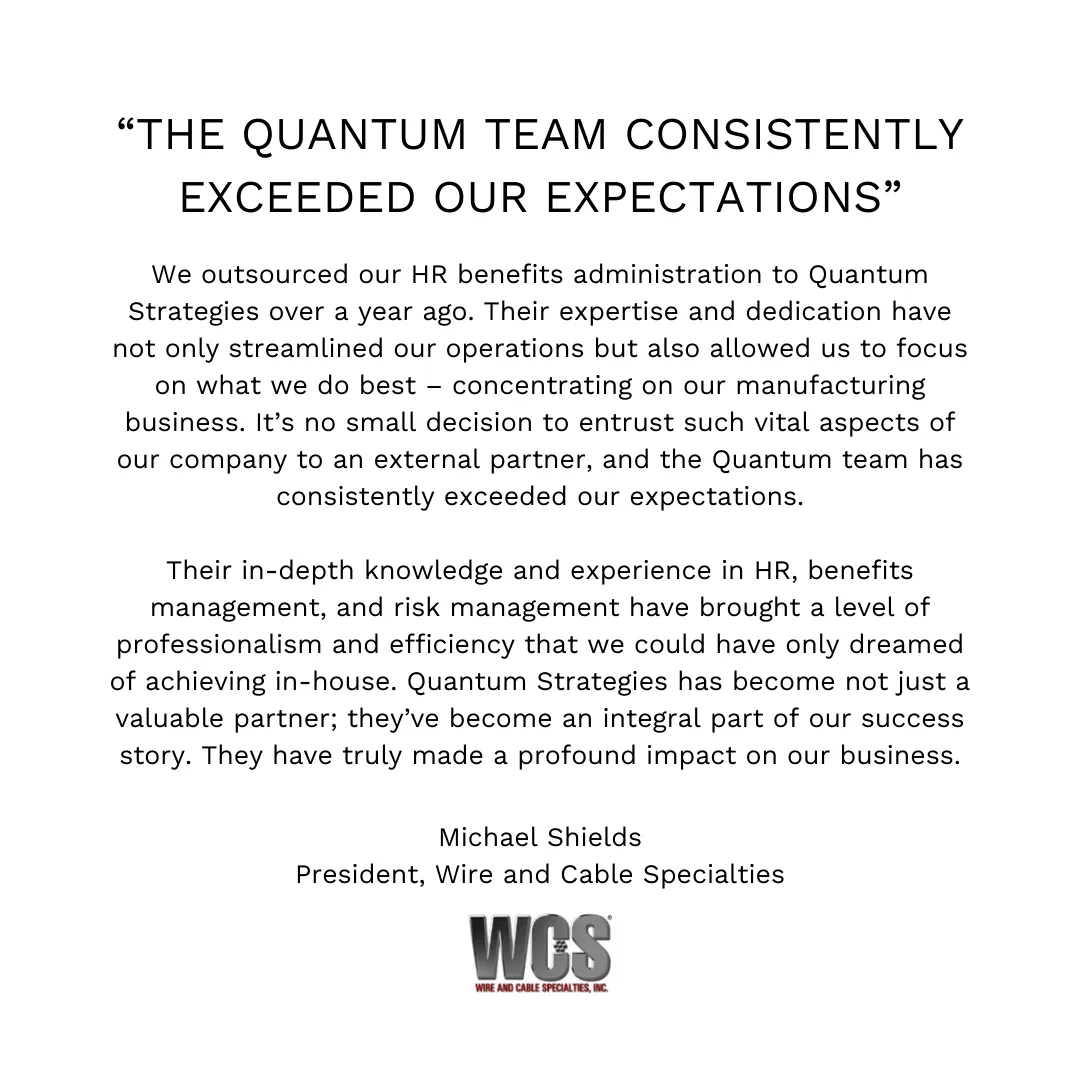
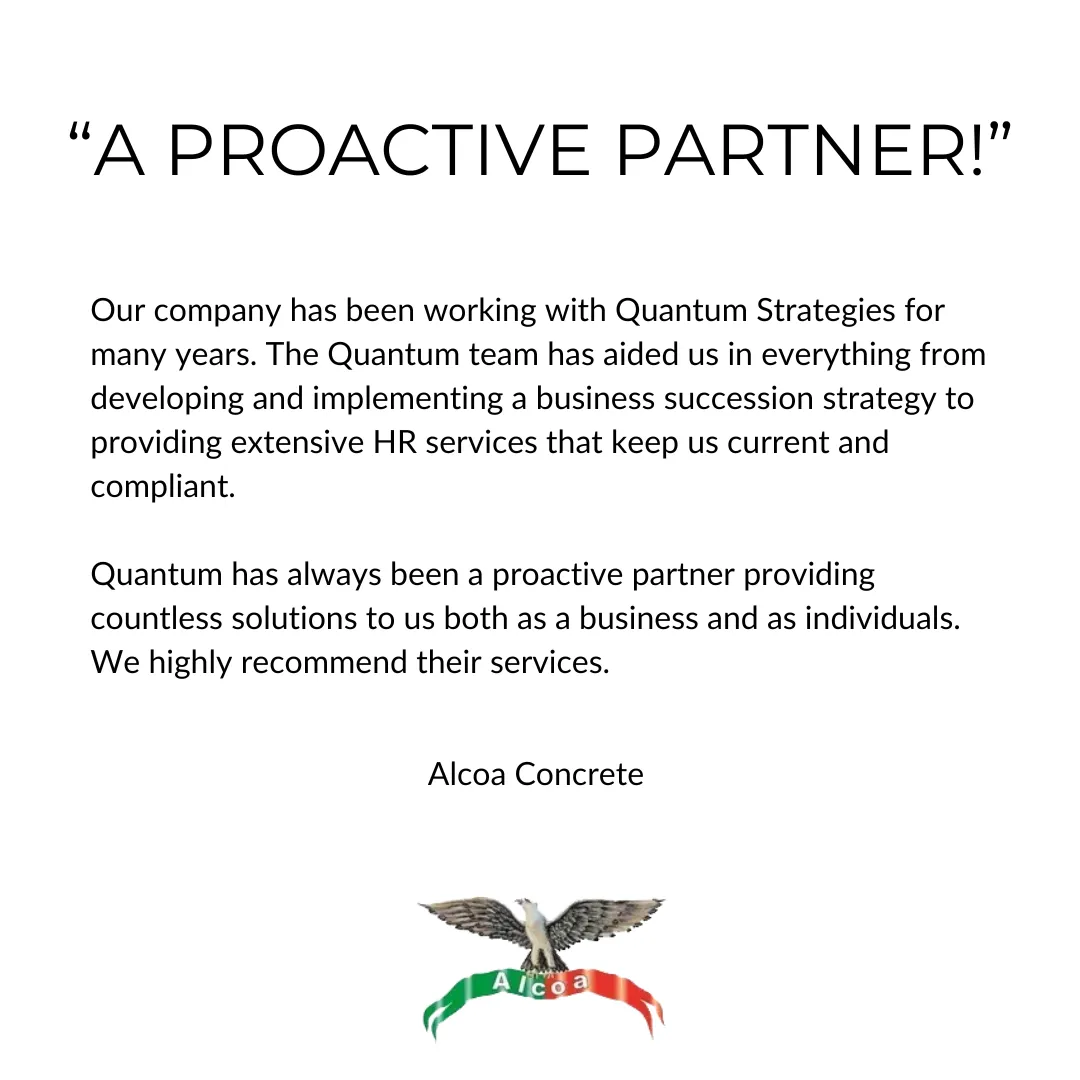
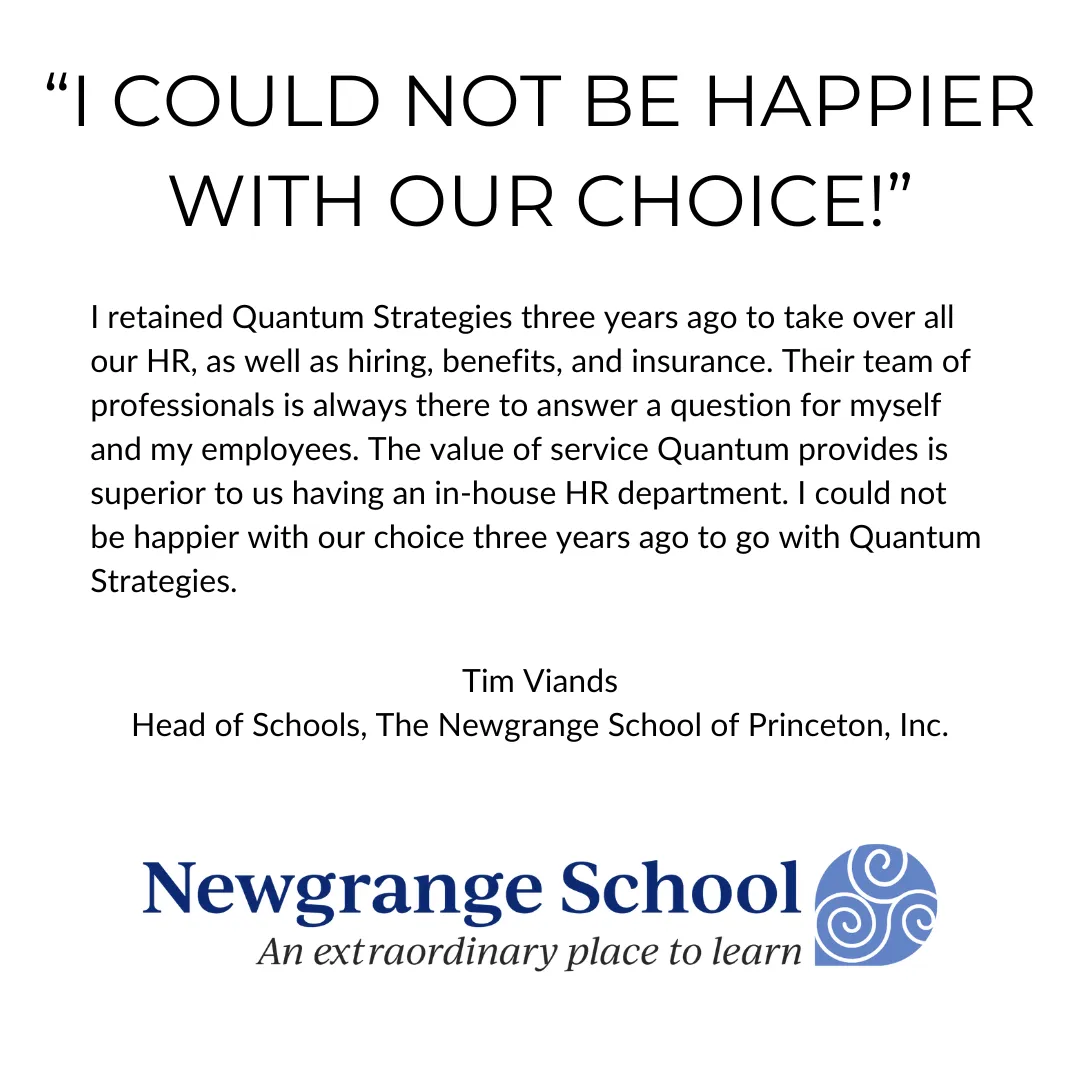
Testimonials
The Quantum Commitment - 100% CLIENT SATISFACTION!
At Quantum, we understand that your satisfaction matters most, and The Quantum Commitment is our way of putting that understanding into action. Experience the difference with a team that is dedicated to making your satisfaction the cornerstone of our service. Because when you choose Quantum, you choose excellence, reliability, and a commitment to exceeding your expectations every time.
Our Resources
Unveiling Proven Strategies and Insights.
Discover actionable tips, expert advice, and industry insights to fuel your journey towards success.


Fostering a Psychologically Safe Workspace
As we navigate the complexities of the post-pandemic world, the importance of mental health in the workplace has surged to unprecedented levels. According to research from the
American Psychological Association, 81% of employees are now actively seeking workplaces prioritizing mental well-being.

Key Challenges Faced by Human Resources in Nonprofit Organizations
The nonprofit sector brings its own set of specialized difficulties, especially in the area of human resources (HR). Although these difficulties may share some common ground with those in the for-profit industry, they possess unique characteristics that require special attention from nonprofit leaders.

Maximizing Business Performance with HR Analytics: Harnessing Data-Driven Insights for Effective People Management
HR analytics involves collecting, analyzing, and reporting data related to human resource management within an organization.
FOUND THESE HELPFUL?
Explore Additional Articles and Resources In Our Blog

How HR Operations Drive Business Performance: A Strategic Framework
As companies adopt new technologies such as artificial intelligence, many focus on moving faster and working smarter. However, when HR operations rely on manual processes, disconnected systems, or unclear workflows, those goals quickly become harder to achieve. Technology alone can’t drive performance if the foundation supporting it isn’t built to scale.
HR operations are often seen as back-office tasks, but they play a critical role in how well a business runs. When HR processes and systems run smoothly, employees receive better support, leaders make more informed decisions, and organizations are better prepared to grow. This framework explains why HR operations matter and how strengthening them can improve business performance.
What Are HR Operations?
HR operations encompass the day-to-day processes that keep an organization’s HR function running smoothly. These responsibilities include managing employee records, payroll and benefits, supporting employees, and ensuring HR systems operate effectively. Although these tasks often occur behind the scenes, they are essential to a business's functioning. Strong HR operations ensure employees receive timely support and provide leaders with reliable information to make informed decisions.
HR Operations vs. HR Strategy
HR operations focus on how HR work gets done, while HR strategy focuses on what the organization is trying to achieve. Strategy sets goals around talent, culture, and growth, but operations turn those goals into daily actions through systems, processes, and service delivery.
When HR operations and HR strategy work together, organizations can move faster, reduce errors, and better support employees. According to Gartner, nearly 34% of HR leaders believe their current HR structure allows HR to quickly adapt to changing business priorities, highlighting how operational limitations often prevent strategy from being executed effectively.
The Business Case for Strong HR Operations
Strong HR operations play a critical role in how efficiently an organization runs and how well employees are supported. When HR processes rely heavily on manual work or lack consistency across systems and workflows, costs tend to increase, errors become more frequent, and overall service quality can decline.
In contrast, well-structured HR operations create clearer processes, improve accuracy, and reduce operational risk. They also provide leaders with reliable data and insights, enabling better decision-making and helping the organization respond more effectively to changing business needs.
Cost Efficiency and Resource Optimization
Strong HR operations help reduce costs by minimizing manual work and limiting errors across everyday processes. When HR workflows are streamlined and supported by the right systems, teams save time, improve accuracy, and increase overall HR operational efficiency.
This shift allows HR professionals to spend less time on repetitive administrative tasks and more time focusing on initiatives that support employees, improve the employee experience, and contribute to broader business goals.
Employee Experience and Retention
HR operations play a direct role in how employees experience the organization on a daily basis. When HR services are fast, accurate, and easy to access, employees feel better supported and more confident in the systems around them.
Strong HR operations improve HR service delivery, reduce frustration, and create a more consistent and positive employee experience, which can ultimately support higher engagement and retention.
Data-Driven Decision Making
Strong HR operations provide clean, reliable data that leaders can trust when making decisions. When employee information is accurate, consistent, and easy to access, organizations can track key workforce trends such as turnover, hiring needs, and skills gaps.
This visibility allows HR and leadership teams to respond more quickly to changes, identify risks earlier, and plan more effectively for future workforce needs.
Compliance and Risk Mitigation
HR operations help organizations comply with labor laws and reduce the risk of costly mistakes. Clear processes, accurate records, and consistent documentation strengthen compliance and support audit readiness.
Well-structured HR operations also make it easier to keep policies up to date as regulations change, ensuring that employees are treated consistently and that the organization is protected from unnecessary risk.
Building a Strategic HR Operations Framework
Building strong HR operations requires a clear and structured approach. Rather than making isolated or reactive changes, organizations benefit from reviewing current processes, setting clear goals, and improving systems step by step.
A strategic framework helps HR teams create consistent, reliable operations that can scale as the business grows and better support long-term performance. Deloitte’s HR strategy guidance consistently emphasizes that sustainable transformation requires alignment across people, processes, and technology—not just new systems.
Key Steps:
1. Assess your current HR operations- Evaluate existing HR processes, systems, and workflows to uncover gaps, inefficiencies, and opportunities for improvement.
2. Define clear metrics and KPIs- Set measurable benchmarks to track HR performance, service quality, and overall operational efficiency.
3. Invest in the right technology- Implement HR systems and automation tools that streamline work and improve data accuracy.
4. Standardize HR processes- Establish consistent workflows and clear documentation to reduce errors and ensure dependable execution.
5. Build a culture of continuous improvement- Regularly review performance, gather feedback, and refine processes to keep HR operations aligned with business needs.
Real-World Example: HR Operations in Action
Consider a mid-sized company with around 500 employees that relied heavily on manual HR processes and disconnected systems. The HR team spent most of its time on administrative tasks, errors occurred more frequently, and employee requests were slow to be resolved. After implementing a centralized HRIS and automating key workflows, HR became more efficient, reduced mistakes, and was better able to support employees and overall business growth.
Common HR Operations Challenges (and How to Solve Them)
Siloed data
Problem: HR information spread across multiple systems leads to errors and poor visibility.
Solution: Centralize employee data in a single HR system to improve accuracy and reporting.
Manual, repetitive tasks
Problem: HR teams spend too much time on administrative work.
Solution: Use automation and employee self-service tools to reduce workload and improve efficiency.
Lack of metrics
Problem: Without clear data, HR struggles to measure impact or identify issues.
Solution: Define KPIs and dashboards to track performance and guide decisions.
Resistance to change
Problem: Employees may resist new HR systems or processes.
Solution: Support adoption through clear communication, training, and ongoing guidance.
Many of these challenges are also common barriers during larger HR transformation efforts.
How to Get Started with HR Operations Transformation
Start small- Focus on one high-impact area, such as onboarding or employee support, and improve it before expanding to other processes.
Partner with experts- External HR experts can help assess current operations, recommend improvements, and avoid costly mistakes during implementation.
Align with business goals- Connect HR operations improvements to business priorities like growth, efficiency, and employee retention to gain leadership support.
Leverage existing data- Use current HR data to identify trends, spot inefficiencies, and guide improvement efforts before investing in new tools.
Communicate early and often- Clearly explain why changes are being made and how they will benefit employees to build trust and increase adoption.
HR Operations as a Strategic Advantage
Strong HR operations enable organizations to run more efficiently, support employees more effectively, and adapt to change with confidence. By strengthening processes, systems, and data, HR can move beyond administrative work and play a more strategic role in the business. Organizations that invest in HR operations today are better positioned for long-term growth, improved decision-making, and the evolving demands of the future workplace.
Take the First Step Toward Stronger HR Operations
If your HR processes feel slow, manual, or difficult to scale, it may be time for a closer look. An HR operational assessment provides clarity on what’s working, what’s not, and where to focus next for the greatest impact.

Connect


Keep Up with Our Latest News and Insights
Subscribe to Quantum Strategies' latest updates and insights.
Office: Philadelphia, PA | Glen Mills, PA | Washington, DC
Call 610.624.1770
Email: info@QS2500.com
Site: www.QS2500.com