
Tailored HR Solutions as Unique as Your Business
Expert consulting and service to elevate your HR from a headache to a value driver.
Does Your HR Function Make the Grade?
Take our 5-minute quiz and evaluate the effectiveness of your HR function.

How We Help
We Focus on Your HR Needs,
So You Can Focus on Your Mission.
At Quantum Strategies, we understand that effective human resource management is the cornerstone of every successful business, regardless of size. Our mission is to provide tailored HR solutions that align perfectly with your unique business needs and growth stage.
Our Services
Navigating Change with Confidence: Quantum Expert HR Solutions
From Policy Assistance to Leadership Succession Planning, Quantum Strategies is Your Ultimate HR Resource to Solve Your Business Challenges.
HR Operational
Assessments
Unlock the full potential of your HR department. Our collaborative approach brings clarity and efficiency to your HR operations, providing a thorough analysis of your department's structure, costs, effectiveness, and needs.
Comprehensive Analysis: Detailed evaluation of your organization, workgroups, and individual roles for optimized efficiency.
Objective Insights: Receive a clear blueprint highlighting your HR department's strengths, weaknesses, and gaps.
Strategic Recommendations: Actionable plans focusing on technology utilization, communication enhancement, and leveraging department strengths.
HR Consulting and Managed Services
Tailored to align with your unique needs, our HR consulting and managed services enhance operational efficiency and effectiveness, allowing you to focus on your core mission while we optimize your HR investment.
Expert Supplemental Support: Strengthen your existing HR team with specialized expertise to navigate complex HR landscapes.
Personalized, Agile Solutions: Customized services for organizations with or without HR teams, adaptable to your specific requirements.
Goal-Oriented, Clear Communication: Delivering precise, actionable strategies that align with your organization’s goals and ensure successful execution.
Custom HRIS Design and Integration
Revolutionize your HR data management. Our team will evaluate your current human resources technology stack, offer recommendations, and then integrate your new and existing systems with our cutting-edge technology, ensuring seamless data flow and optimized operational efficiency.
Seamless Integration: Connect legacy systems with modern platforms for streamlined data management.
Tailored Design: Custom HRIS solutions uniquely crafted to meet your specific business needs.
Advanced Analytics: Leverage data-driven insights for strategic decision-making and operational excellence.
“Successfully steering through the specialized HR challenges within organizations of all kinds demands expert understanding, strategic planning, and precise implementation. With comprehensive knowledge of these challenges and the right solutions, your business can stay focused and successful in their vital missions.”
William J. Rizzo

Who we Are.
We Focus on Your HR Needs,
So You Can Focus on Your Mission.
At Quantum Strategies, we recognize that proficient management of human resources is fundamental to the success of any enterprise, irrespective of its scale. Our objective is to deliver customized human resource solutions that are in perfect harmony with your distinct business requirements and developmental phase.
Constant Improvement
Commitment to Customers
High Level Of Knowledge
Best Service You Can Get

Why Choose Us
A True Partner to Solve Your Most Complex HR Challenges.
Empowering HR Innovation and Compliance
Commitment to 100% Client Satisfaction
People-First Approach

Peace of Mind:
Handle ongoing compliance with ease

Employee Satisfaction:
Build a positive workplace with engaged employees

Strategic Confidence:
Drive strategy with advanced analytics

Leadership Development:
Equip your team with the tools to lead

2,245 +
Happy Clients

25 +
Years Of Experience

120 +
Professional Team
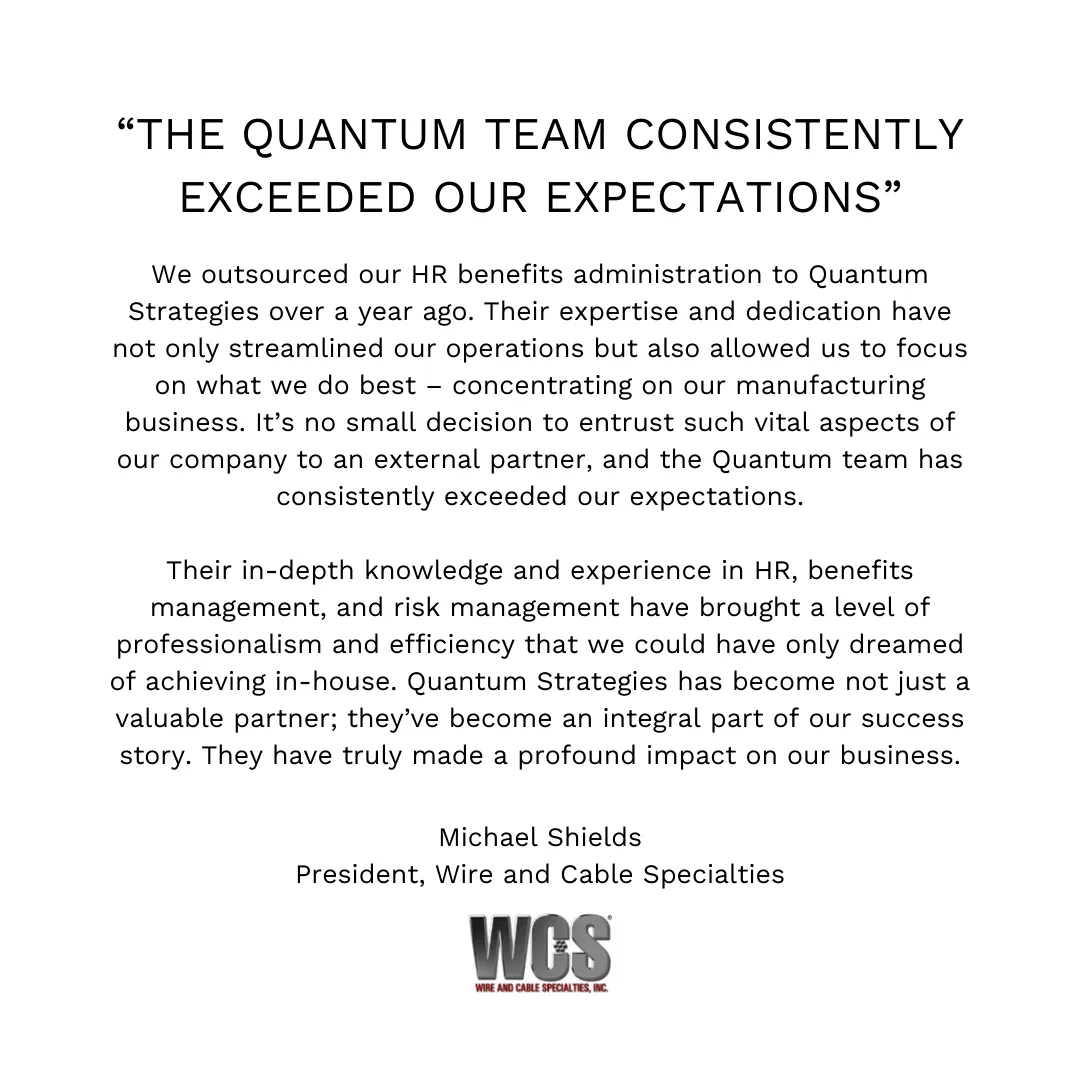
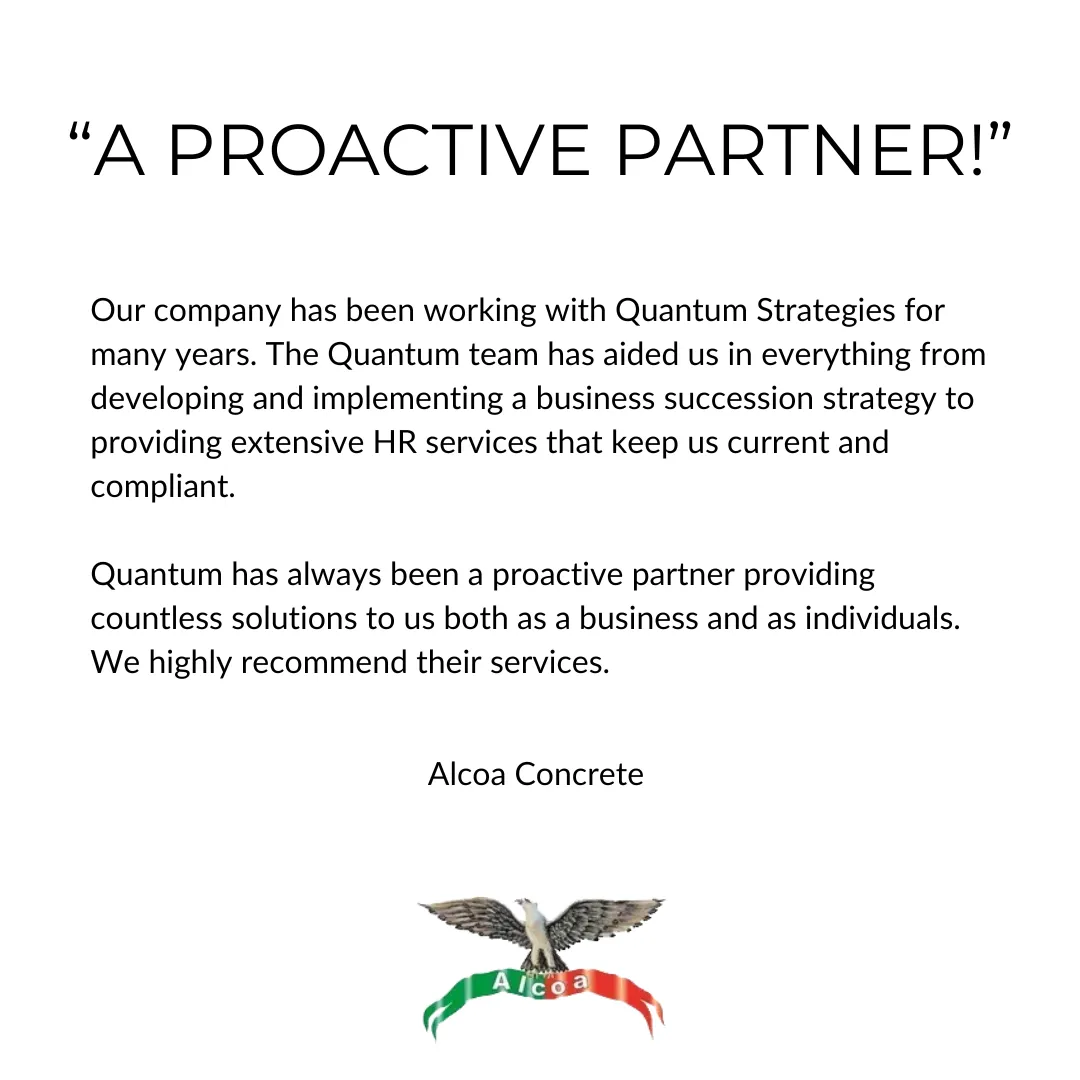
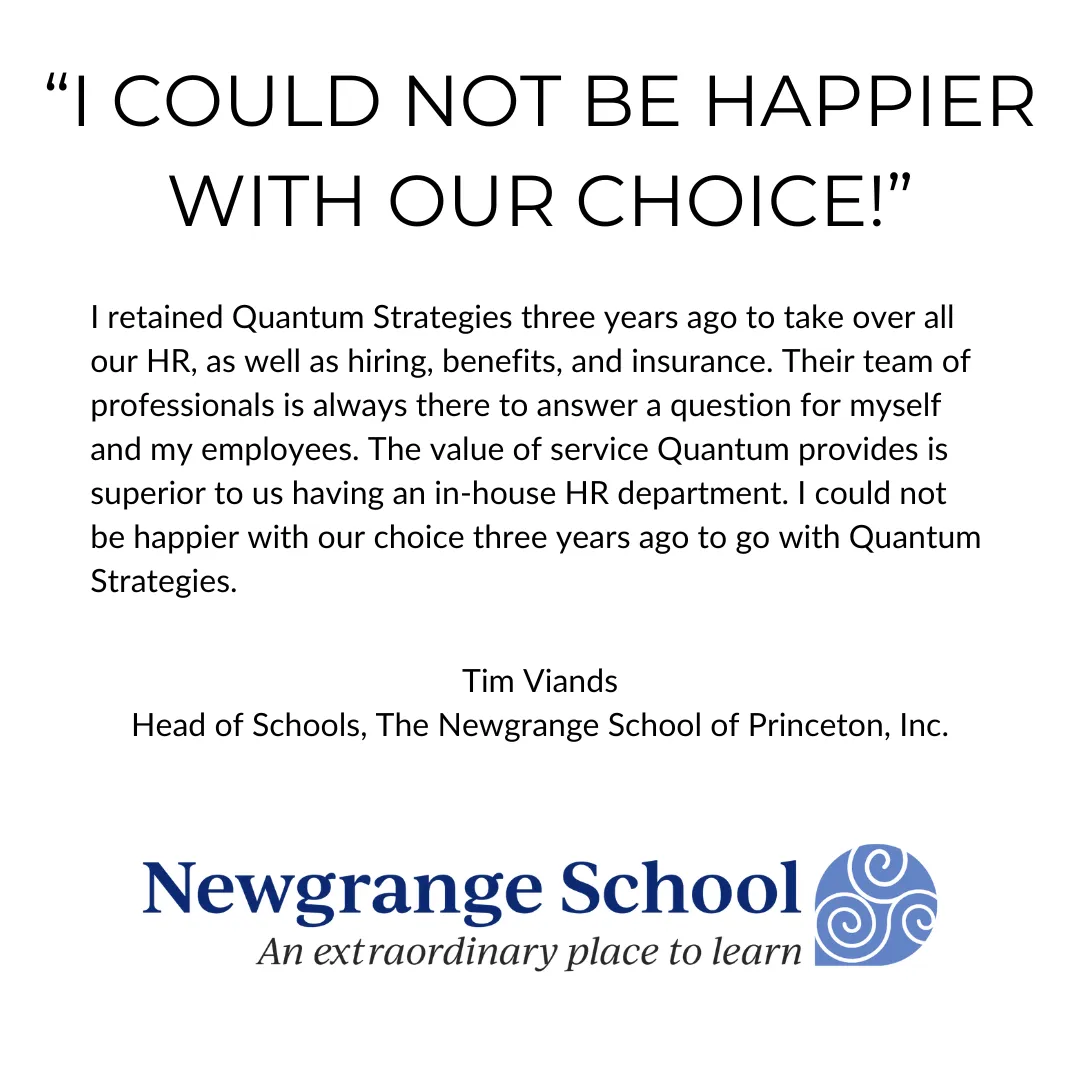
Testimonials
The Quantum Commitment - 100% CLIENT SATISFACTION!
At Quantum, we understand that your satisfaction matters most, and The Quantum Commitment is our way of putting that understanding into action. Experience the difference with a team that is dedicated to making your satisfaction the cornerstone of our service. Because when you choose Quantum, you choose excellence, reliability, and a commitment to exceeding your expectations every time.
Our Resources
Unveiling Proven Strategies and Insights.
Discover actionable tips, expert advice, and industry insights to fuel your journey towards success.


Fostering a Psychologically Safe Workspace
As we navigate the complexities of the post-pandemic world, the importance of mental health in the workplace has surged to unprecedented levels. According to research from the
American Psychological Association, 81% of employees are now actively seeking workplaces prioritizing mental well-being.

Key Challenges Faced by Human Resources in Nonprofit Organizations
The nonprofit sector brings its own set of specialized difficulties, especially in the area of human resources (HR). Although these difficulties may share some common ground with those in the for-profit industry, they possess unique characteristics that require special attention from nonprofit leaders.

Maximizing Business Performance with HR Analytics: Harnessing Data-Driven Insights for Effective People Management
HR analytics involves collecting, analyzing, and reporting data related to human resource management within an organization.
FOUND THESE HELPFUL?
Explore Additional Articles and Resources In Our Blog

Beyond Technology - The Three Pillars of Readiness in HR Transformation
Why HR Transformation Readiness Goes Beyond Software
When organizations value HR transformation readiness, technology often dominates the conversation. New platforms, automation, and modern tools usually get the majority of the attention. However, experience shows that technology does not solely drive success. True readiness depends on three core pillars, including people, processes, and technology that work together as part of an effective plan for HR transformation.
People Capability and Buy-In
Leadership Behavior Drives Change Readiness
At the center of every successful HR transformation are individuals responsible for leading and implementing the change. Readiness needs more than just executive approval, by needing more visible behavioral changes by individuals in leadership. The leaders must clarify priorities and new ways of modeling work rather than handing off the responsibilities to HR. Having strong leadership alignment is a key input to any changes in the readiness assessment.
Employee Understanding and Trust Enable Adoption
Equally, employee readiness plays an important role. When employees understand why a change is happening and have confidence in leadership, adoption improves. Clear communication and transparency will reduce resistance and hesitancy, two of the more common reasons HR transformations fail. Even a well-designed initiative will struggle without having this foundation.
HR Team Capability Is Often an Overlooked Risk
HR teams must also make sure they are prepared. Many organizations reveal skill gaps during transformation, particularly in data analysis, digital tools, and leadership change. Identifying and addressing these gaps early helps assist progress once the new systems and processes are introduced and supports HR modernization preparation.
Process Maturity and Documentation
Why Weak Processes Undermine Transformation
The most common reason for struggles in HR transformation is the lack of process maturity. Organizations will often assume that processes are standardized, but only to find out during implementation that workflows will vary depending on different teams, regions, or even managers. When the processes are uncertain, new technology only magnifies existing issues.
The Illusion of Standardization
Consistent execution is unable to be secured with just shared systems or policies. Uncertain responsibilities, inconsistent date captures, and approvals could all be affected and move in different paths. These variations may feel manageable, however, they can quickly become major obstacles once automation is introduced.
Operating Model Clarity Enables Consistency
Process readiness also depends on a clear, well-defined HR operating model. To help ensure consistency and accountability, there must be defined roles, ownership, and governance. If there is no clarity, decision making will slow, issues could escalate, and transformation efforts could lose all momentum.
Process Readiness as a Foundation for HR Transformation Planning
Organizations that document, align processes, and simplify before transforming create a strong foundation for success. Clear workflows improve adoption, reduce rework, and allow technology to deliver value rather than reinforce complexity. This work is central to any effective HR transformation assessment.
Technology Infrastructure and Data Quality
Assessing HR Technology Readiness
The starting point for any HR transformation is often technology. But this also tends to be a common source of friction. Many organizations use separate HR systems across multiple platforms for payroll, recruiting, benefits, and performance. These systems create integration challenges that slow progress and increase risk, making HR technology readiness a critical area to focus on.
How Data Quality Impacts Transformation Outcomes
Data quality often makes these challenges worse. During transformation, organizations frequently uncover inconsistent job codes, incomplete employee records, and outdated structures. These issues will slow the implementation and weaken the trust in the system after it goes live. When data cannot be relied on, the adoption and confidence will suffer.
Technology Should Enable Better Ways of Working
Technology should not be used to reinforce outdated processes or disconnect teams, but rather to support better ways of working. Organizations can’t just move existing workflows to new platforms without addressing the processes or data limitations that affect the value of the investment. HR transformation succeeds when technology enables clarity, consistency, and better decision-making.
Why Data Readiness Must Be Addressed Early
Data readiness is usually underestimated until late in the process, when issues with migration begin to start affecting costs and timelines. Organizations better equipped to avoid rework or delays tend to evaluate data quality early, address gaps, and clarify ownership upfront. Strong technology readiness is mainly about the foundation behind the tools.
The Five Core Dimensions to Evaluate
Why a Structured HR Transformation Assessment Matters
Once an organization recognizes that readiness extends beyond technology, the next step is determining what to evaluate. Readiness is not a simple “yes or no” decision. It is composed of interconnected dimensions that, together, determine whether an organization is prepared to move forward. Conducting a structured HR transformation assessment early on helps leaders set realistic expectations, identify risks, and prioritize more effective efforts.
Leadership Alignment and Executive Sponsorship
What Real Executive Sponsorship Looks Like
Leadership alignment is one of the strongest predictors of HR transformation success. Even though many initiatives receive verbal approval, true readiness encourages executive sponsorship. This includes visible involvement in decision-making, consistent communication, and a willingness to prioritize the transformation when competing demands arise.
How Leadership Commitment Shows Up in Practice
Commitment shows up in daily behaviors. Leaders who are aligned to make timely decisions, reinforce change, and remove obstacles through their own actions. When leaders model the behaviors required for transformation, adoption improves across the whole organization.
Red Flags That Signal Weak Alignment
Clear warning signs of weak alignment include shifting priorities, inconsistent messaging or communication, and frequent changes in direction. When ownership is pushed entirely onto HR or difficult decisions are avoided, transformation efforts could lose credibility and momentum.
Why Early Alignment Protects Transformation Outcomes
Organizations that determine leadership alignment honestly and address gaps early are better positioned to manage complications and assist momentum throughout the change. This step is crucial to effective HR transformation planning.
Current HR Technology Stack Assessment
Understanding the Existing Technology Landscape
Before introducing new systems, organizations need to have a clear view of their current HR technology environment and how well tools will work together.
Auditing Systems, Integrations, and Overlap
Many organizations discover overlapping platforms with limited integrations. These overlaps create inconsistent data, duplicated work, and confusion.
Identifying Gaps, Redundancies, and Migration Risk
Gaps may show missing capabilities, while redundancies often point to simplification opportunities. Data migration risk increases when data structures are inconsistent or when ownership is uncertain.
Using Technology Assessment to Enable Better Decisions
A clear understanding of the HR technology stack reduces surprises and supports smarter, more confident transformation decisions.
Process Documentation and Standardization Maturity
What “Process-Ready” Really Means
Process maturity refers to how clearly workflows are documented and consistently followed. Process-ready organizations apply workflows uniformly, allowing technology to support efficiency rather than create confusion.
Process maturity refers to how clearly workflows should be documented and consistently followed. Process-ready organizations apply workflows uniformly, allowing technology to support efficiency rather than create confusion.
Why Inconsistency Signals Low Readiness
Variation across different teams or regions is a strong indicator of low readiness. These inconsistencies often lead to conflicting data, delays, and uneven employee experiences during transformation.
The Risk of Automating Broken Processes
Automating unclear or inefficient workflows increases operational friction. Successful transformations prioritize clarity and standardization before automation to improve HR technology readiness and long term outcomes.
Organizational Change Capacity
Why Capacity Matters More Than Strategy
Even strong strategies will fail when organizations lack the capacity to adapt to change. Change capacity reflects an organization’s ability to manage disruption while maintaining daily operations. In a recent study from Deloitte, they found that only 8% of organizations are making great progress on freeing up worker capacity, while 82% recognize the importance.
Using Past Change Efforts as Readiness Indicators
Past initiatives often reveal patterns in readiness. Successful efforts typically demonstrate clear ownership and strong communication, while stalled initiatives highlight gaps that should be addressed before moving forward.
Common Constraints That Limit Change Readiness
Limited resources, skill gaps, and competing priorities often weaken the capacity. Identifying these constraints early allows organizations to adjust timing as part of HR modernization preparation.
The Impact of Employee Change Fatigue
Recurring or overlapping initiatives can lead to change fatigue. When employees feel overwhelmed, engagement and adoption decline. Sustainable transformation requires pacing change realistically.
Data Quality and Analytics Foundation
Why Data Readiness Is a Core Dimension
Reliable data supports every HR transformation. Without it, even the well-designed initiatives struggle to deliver value.
Master Data Accuracy Levels
Inconsistent or outdated master data increases migration risk and rework. Early assessment helps determine remediation needs before implementation.
Current Reporting and Analytics Capability
Having a heavy reliance on manual reporting signals will limit readiness. Strong analytical capabilities enable better decision-making and support modernization goals.
Data Governance Practices
Clear data ownership and standards prevent recurring issues. Strong governance supports sustainable improvement and the preparation for long-term HR modernization.
Conducting a Formal Readiness Assessment
Conducting a formal readiness assessment will turn insight into action. This will create alignment, surface the risks early, and support a better HR transformation plan.
Building Your Assessment Framework
Assessments should be able to define clear criteria across each of the processes, data, leadership, technology, and change capacity.
Scoring Methodology
Having simple scoring models like low, medium, and high readiness will keep assessments accessible while pointing out risk areas.
Weighting Factors Based on Transformation Scope
Weighting factors should be able to reflect the goals of the transformation. When an organization has heavy technology initiatives, it may emphasize HR technology readiness, but also focus efforts on the process that may prioritize standardization.
Who Needs to Be Involved
Readiness assessments are most effective when they include HR, IT, finance, and operations.
Realistic Timeline for Assessment Activities
To avoid blind spots and strengthen the change readiness assessment, it is required to review documentation, interviews, and discovery.
Interpreting Your Readiness Score
What High, Medium, and Low Readiness Mean
● High readiness: Proceed with confidence
● Medium readiness: Phase the transformation
● Low readiness: Pause and build the foundation
Making the Go / No-Go Decision
Delaying may be necessary when risks outweigh benefits. Preparatory work protects ROI and reduces long-term execution risk.
Common Readiness Gaps and How to Address Them
Weak Process Foundation
Having clear and documented workflows are essential. Standardization improves execution and overall HR transformation readiness.
Limited Change Management Resources
Organizations may need to adjust timelines, upskill teams, or supplement capacity to support adoption.
Poor Data Quality
Early cleanup and governance reduce migration risk and strengthen HR technology readiness.
Creating Your Readiness Improvement Roadmap
Turning Assessment Insights Into Action
Identifying readiness gaps is only valuable if organizations act on the results. A readiness improvement roadmap helps translate assessment findings into clear, prioritized actions. It ensures HR transformation planning is realistic and focused on reducing risk.
Prioritizing Pre-Transformation Activities
Not every gap needs to be addressed all at once. Organizations should highlight any issues that pose the most risk to adoption and execution. High-impact gaps, such as unclear ownership, data issues, and inconsistent processes, should be the top priority.
Quick fixes can often be completed early, while more foundational work may take longer. This approach will strengthen overall HR transformation readiness without affecting momentum.
Resource Allocation Planning
Readiness work requires dedicated time and attention. Many organizations underestimate the effort that is required to complete work alongside daily operations. Without sufficient capacity, progress will slow, and priorities will clash.
Effective planning balances internal ownership with targeted external support when it’s needed. Aligning people, time, and budget early on will help support successful HR modernization preparation.
Setting Realistic Timelines
When it comes to building a foundation, it should take some time because rushing into implementation can often lead to rework, delays, and increased costs. Setting realistic timelines enables teams to address readiness gaps thoroughly. Phasing transformation efforts based on readiness progress helps organizations move forward while managing any disruptions and risks.
When to Bring in External Expertise
Recognizing When Internal Capacity Is Limited
Some organizations have the experience and the capacity to manage readiness efforts internally. Others benefit from external support, particularly when the transformation experience is limited or the internal priorities restrict focus. Organizational complexity, political sensitivity, or even large-scale system changes are also signs that the outside expertise may be helpful.
The Value External Readiness Partners Provide
Partners use external readiness, which provides frameworks and assessments to help confirm assumptions and identify blind spots. They also compare their readiness with other organizations. Additional support can help by improving stakeholder cooperation and guiding organizations on risk management. When this is used properly, change readiness assessment and decision-making processes will be enhanced.
Why Readiness Determines Transformation Success
HR transformation does not depend on speed; it relies more on preparation. Organizations that honestly assess their readiness and tackle gaps early will lower risks and improve adaptation. Viewing readiness as a requirement lets HR leaders safeguard their investment and set their organizations up for long-term success.
Ready to move forward with confidence?
Quantum Strategies helps organizations assess HR transformation readiness across people, processes, and technology—so you can identify risks early and build a clear, actionable path forward.
Schedule an HR Readiness Assessment to understand where you stand and what to address before you transform.

Connect


Keep Up with Our Latest News and Insights
Subscribe to Quantum Strategies' latest updates and insights.
Office: Philadelphia, PA | Glen Mills, PA | Washington, DC
Call 610.624.1770
Email: info@QS2500.com
Site: www.QS2500.com