
Tailored HR Solutions as Unique as Your Business
Expert consulting and service to elevate your HR from a headache to a value driver.
Does Your HR Function Make the Grade?
Take our 5-minute quiz and evaluate the effectiveness of your HR function.

How We Help
We Focus on Your HR Needs,
So You Can Focus on Your Mission.
At Quantum Strategies, we understand that effective human resource management is the cornerstone of every successful business, regardless of size. Our mission is to provide tailored HR solutions that align perfectly with your unique business needs and growth stage.
Our Services
Navigating Change with Confidence: Quantum Expert HR Solutions
From Policy Assistance to Leadership Succession Planning, Quantum Strategies is Your Ultimate HR Resource to Solve Your Business Challenges.
HR Operational
Assessments
Unlock the full potential of your HR department. Our collaborative approach brings clarity and efficiency to your HR operations, providing a thorough analysis of your department's structure, costs, effectiveness, and needs.
Comprehensive Analysis: Detailed evaluation of your organization, workgroups, and individual roles for optimized efficiency.
Objective Insights: Receive a clear blueprint highlighting your HR department's strengths, weaknesses, and gaps.
Strategic Recommendations: Actionable plans focusing on technology utilization, communication enhancement, and leveraging department strengths.
HR Consulting and Managed Services
Tailored to align with your unique needs, our HR consulting and managed services enhance operational efficiency and effectiveness, allowing you to focus on your core mission while we optimize your HR investment.
Expert Supplemental Support: Strengthen your existing HR team with specialized expertise to navigate complex HR landscapes.
Personalized, Agile Solutions: Customized services for organizations with or without HR teams, adaptable to your specific requirements.
Goal-Oriented, Clear Communication: Delivering precise, actionable strategies that align with your organization’s goals and ensure successful execution.
Custom HRIS Design and Integration
Revolutionize your HR data management. Our team will evaluate your current human resources technology stack, offer recommendations, and then integrate your new and existing systems with our cutting-edge technology, ensuring seamless data flow and optimized operational efficiency.
Seamless Integration: Connect legacy systems with modern platforms for streamlined data management.
Tailored Design: Custom HRIS solutions uniquely crafted to meet your specific business needs.
Advanced Analytics: Leverage data-driven insights for strategic decision-making and operational excellence.
“Successfully steering through the specialized HR challenges within organizations of all kinds demands expert understanding, strategic planning, and precise implementation. With comprehensive knowledge of these challenges and the right solutions, your business can stay focused and successful in their vital missions.”
William J. Rizzo

Who we Are.
We Focus on Your HR Needs,
So You Can Focus on Your Mission.
At Quantum Strategies, we recognize that proficient management of human resources is fundamental to the success of any enterprise, irrespective of its scale. Our objective is to deliver customized human resource solutions that are in perfect harmony with your distinct business requirements and developmental phase.
Constant Improvement
Commitment to Customers
High Level Of Knowledge
Best Service You Can Get



Why Choose Us
A True Partner to Solve Your Most Complex HR Challenges.
Empowering HR Innovation and Compliance
Commitment to 100% Client Satisfaction
People-First Approach

Peace of Mind:
Handle ongoing compliance with ease

Employee Satisfaction:
Build a positive workplace with engaged employees

Strategic Confidence:
Drive strategy with advanced analytics

Leadership Development:
Equip your team with the tools to lead

2,245 +
Happy Clients

25 +
Years Of Experience

120 +
Professional Team
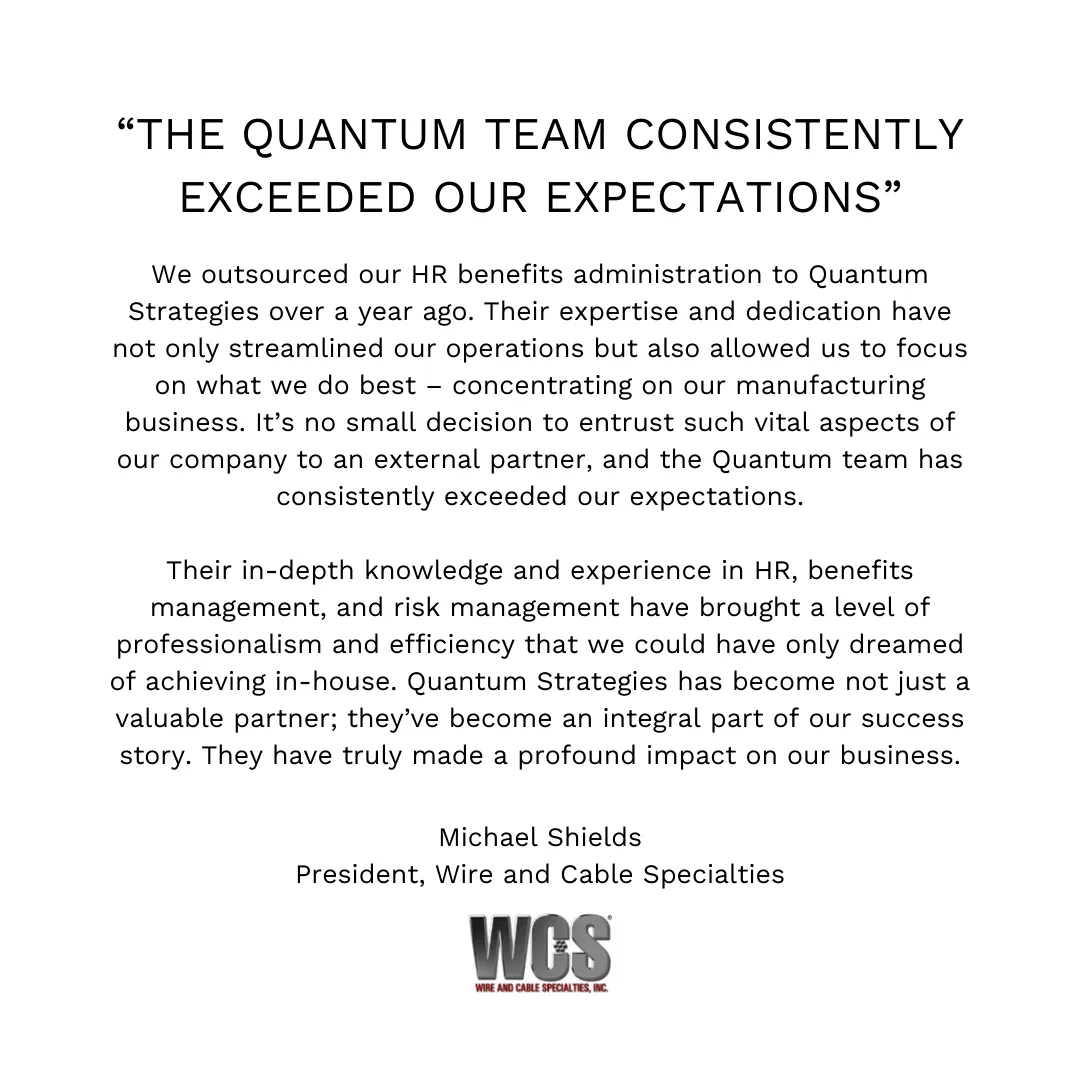
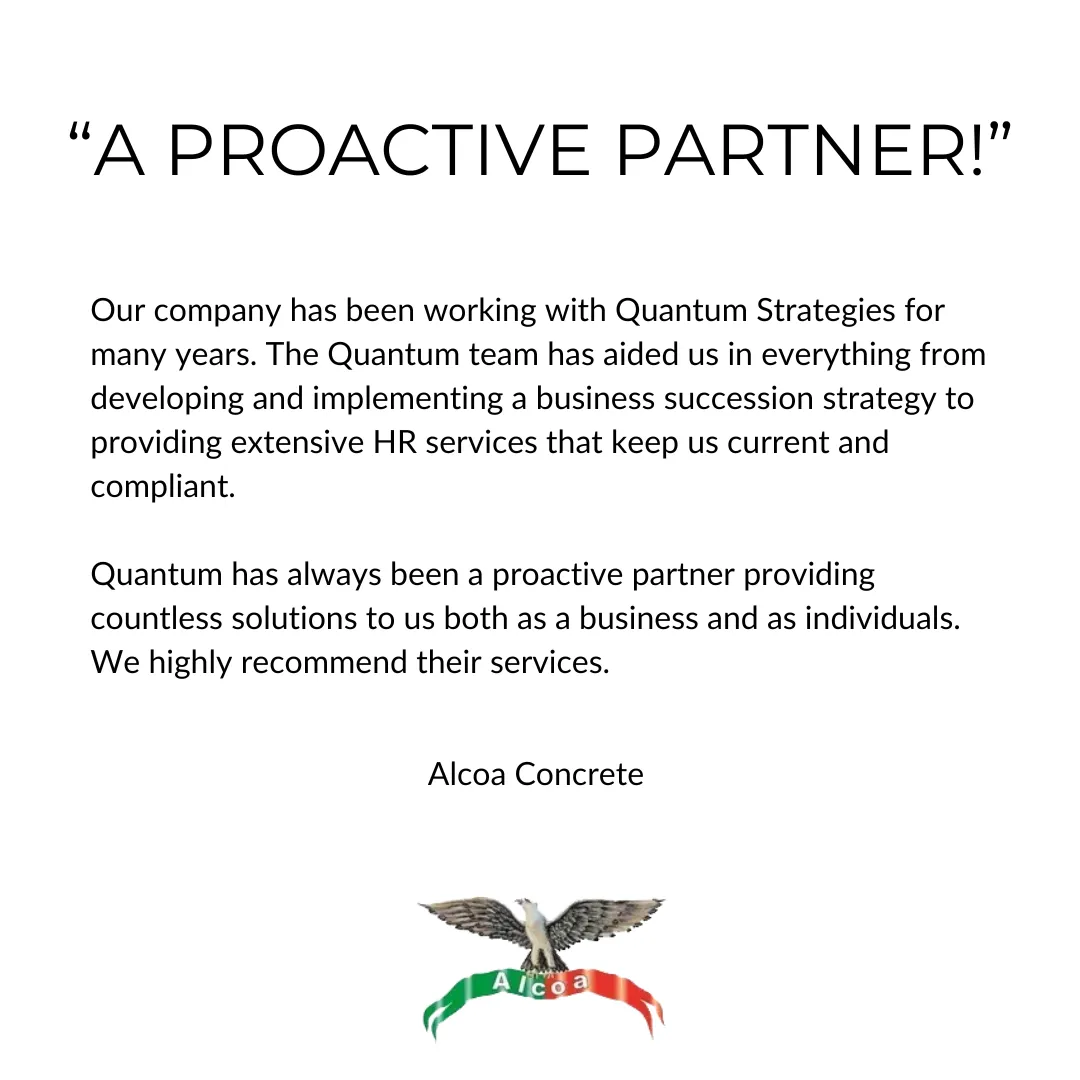
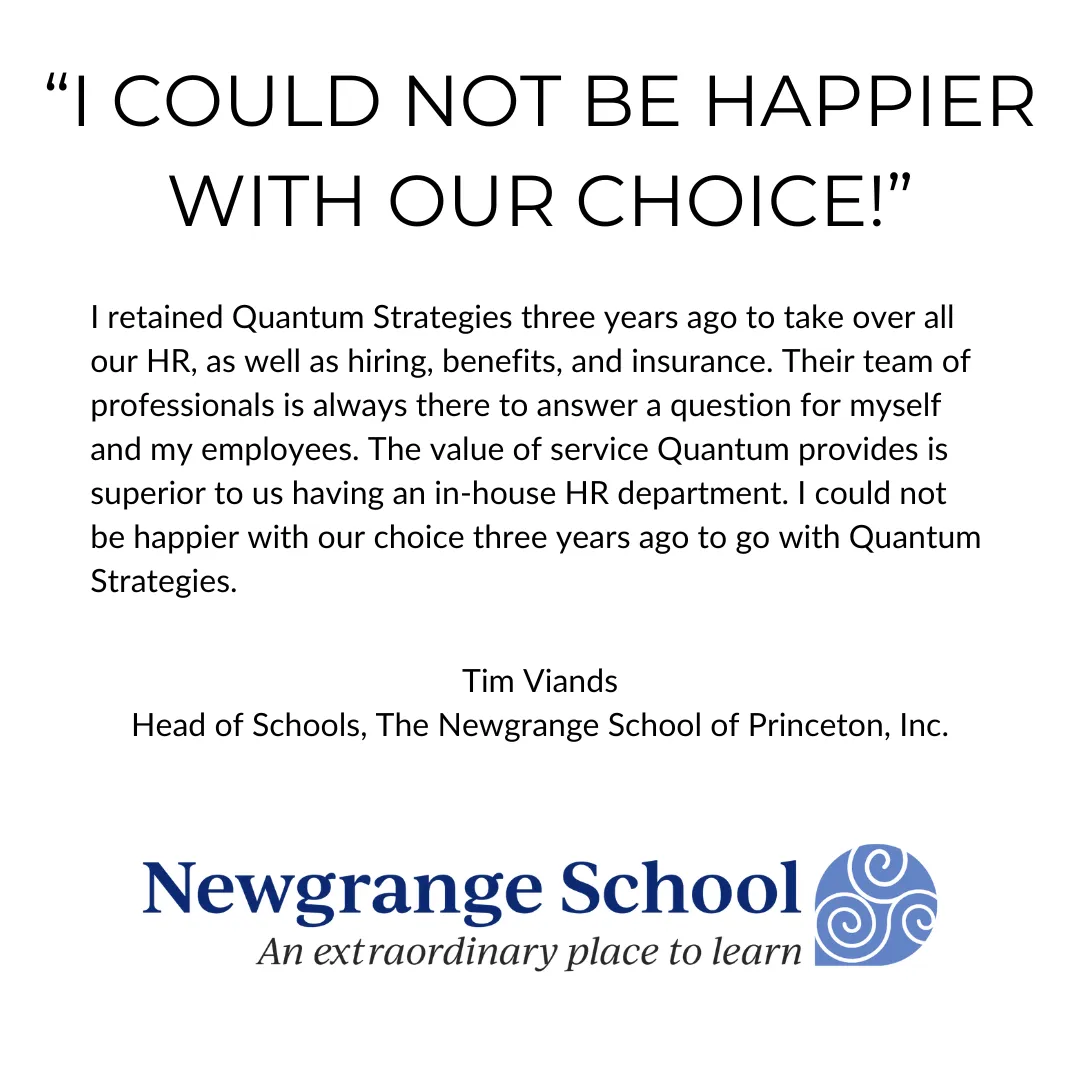
Testimonials
The Quantum Commitment - 100% CLIENT SATISFACTION!
At Quantum, we understand that your satisfaction matters most, and The Quantum Commitment is our way of putting that understanding into action. Experience the difference with a team that is dedicated to making your satisfaction the cornerstone of our service. Because when you choose Quantum, you choose excellence, reliability, and a commitment to exceeding your expectations every time.
Our Resources
Unveiling Proven Strategies and Insights.
Discover actionable tips, expert advice, and industry insights to fuel your journey towards success.


Fostering a Psychologically Safe Workspace
As we navigate the complexities of the post-pandemic world, the importance of mental health in the workplace has surged to unprecedented levels. According to research from the
American Psychological Association, 81% of employees are now actively seeking workplaces prioritizing mental well-being.

Key Challenges Faced by Human Resources in Nonprofit Organizations
The nonprofit sector brings its own set of specialized difficulties, especially in the area of human resources (HR). Although these difficulties may share some common ground with those in the for-profit industry, they possess unique characteristics that require special attention from nonprofit leaders.

Maximizing Business Performance with HR Analytics: Harnessing Data-Driven Insights for Effective People Management
HR analytics involves collecting, analyzing, and reporting data related to human resource management within an organization.
FOUND THESE HELPFUL?
Explore Additional Articles and Resources In Our Blog

HR Digital Transformation Strategy: Step-by-Step Guide
The function of human resources (HR) has developed dramatically in the past few years. In the past, HR merely managed administrative tasks such as payroll, timekeeping, and benefits administration; now, it is a strategic function and growth driver of businesses. Even more so, the digital age has created new opportunities for HR transformation. HR departments leverage data analytics, AI, HR software, and other digital technologies and tools to transform their HR function into a competitive advantage.
What is HR Transformation?
HR Transformation is the act of optimizing HR departments to fit the specific needs of the organization. HR transformation entails a fundamental shift in HR strategy, integrating talent and technology seamlessly and aligning them with HR and organizational strategy to create greater business value for internal and external stakeholders. Guided by a data-driven approach, HR transformation aims to improve your organization's HR team by optimizing HR solutions, HR systems, and the HR operating model using new digital technologies within your organizational design. Using the latest technology within your human resource management department can eliminate repetitive tasks through process automation and artificial intelligence (AI), improve employee experience and engagement, improve the efficiency of remote work throughout, and more.
Why HR transformation?
There are countless reasons to use a digital HR strategy in 2024 to give your business a competitive advantage. The primary benefit is a strategic alignment between HR teams, the departments they support, and the organization's overall goals. Digital work experiences continue to improve and are a positive force for organizational success. The modern era of business has shown the importance of HR in improving employee performance, organization efficiency, and strategic decision-making. An HR transformation will eliminate inefficiencies and save money by streamlining HR processes and optimizing employee performance. Another significant benefit of implementing a successful HR digital transformation is eliminating compliance headaches caused by constantly changing labor laws and regulations, saving time, and reducing stress by ensuring compliance with evolving labor laws and regulations.
Furthermore, HR digital transformation reduces costs through leveraging modern HR technology to streamline and automate redundant tasks and free up employees to be used more strategically improving organizational efficiency. HR digital transformations can also improve talent acquisition strategies using AI-powered candidate assessment tools to ensure quality hires and increase employee retention rates. Additionally, an HR digital transformation will collect vast amounts of employee data which HR and executive leadership can levarage to make insightful, data-driven decisions.
The problem some organizations face when executing successful HR digital transformations is implementing technology that does not fit the business's specific needs. To properly select and implement suitable HR solutions, organizational leaders must clearly define their HR department's and business's objectives and goals before choosing their technologies. Business leaders should prioritize open communication with the stakeholders and managers and avoid one-size-fits-all solutions. Once the needs of an organization are understood, it is essential to tailor a custom HR transformation solution to the business. A pre-packaged technology solution will end up causing more pain than gain for the organization.

Steps to a Successful HR Digital Transformation Strategy
Step 1: Assess HR Capabilities
The only way to properly start an HR digital transformation strategy is through a detailed assessment of an organization's current HR capabilities. The best way to do this is through an HR audit in which HR professionals test and analyze an organization's HR processes, systems, skills, and resources. The output of the HR audit will detail current pain points, inefficiencies, challenges, and opportunities the organization faces. Every organization has different pain points, so the HR audit is essential in developing an HR digital transformation strategy unique to the business. The HR audit also evaluates your current HR processes, digital solutions, and analytics capabilities. Once these strengths and weaknesses are known, an HR transformation blueprint with clear objectives and timelines is developed. During this assessment, it is also essential to evaluate the organizational culture. An organization's culture should promote and foster a workplace where employees are happy and want to succeed. If culture issues are noticed, an actionable plan to change the culture is essential.
The cornerstone of Qunatum Strategies is our HR operational assessment services, which provide a clear and actionable report filled with objective insights that highlight your HR department's strengths, weaknesses, and potential areas for growth backed by data and industry best practices.
Step 2: Define HR Transformation Objectives
Once the needs of the organization's HR department are clearly understood, it is time to create strategic HR transformation objectives and define the scope of the transformation. The goals of the HR transformation should be specific, measurable, achievable, relevant, time-bound, and aligned with key business objectives. The exact time frame should be followed strictly, with milestones for each period, and the goals should address the organization's pain points and weaknesses.
For a digital HR transformation strategy to be successful, one of its goals should be to improve efficiency and reduce redundancies through technology. This could entail updating your payroll system, integrating technologies to centralize HR data and reporting, optimizing analytics capabilities, and securing technological infrastructure. For HR digital systems, find the solution that best fits the needs of the organization that works with their budget.
Step 3: Design an HR Transformation Plan
Once the objectives are known, it is a good idea to assemble a dedicated digital transformation team to build and execute a strategic HR digital transformation project roadmap. The HR roadmap needs a clear direction defined by the measurable goals created in the last step. The HR digital transformation team must address each pain point identified during the HR audit with a unique solution. For a more efficient digital HR strategy, create and streamline a logical goal sequence to eliminate redundancy. Every step of the roadmap should have a milestone objective and a timeframe for completion, making everyone in the organization accountable for their responsibilities in the HR transformation plan.
Furthermore, it is crucial to allocate a budget and resources during this step to ensure that the organization has the necessary resources and staffing to complete the transformation. Clearly define the roles and responsibilities of the HR team, executive leadership, and stakeholders to ensure transparency and that everyone is on the same page.
Step 4: Engage Stakeholders and Build Support
The next step is to engage stakeholders to build support and awareness about the HR strategies and plan you want to introduce. Effective communication is critical to build an understanding of digital transformation efforts happening throughout the organization. Stakeholders, employees, managers, and executives should all clearly understand the vision and goals of the HR transformation roadmap. Creating awareness around the traditional HR operating model and the transformation process you will be implementing, along with the benefits it will bring to the company, will gain support from leadership and ensure their alignment with the goals outlined in the HR roadmap.

Step 5: Implementation
Follow the HR transformation roadmap strictly and the timelines it has outlined. Communicate and celebrate with the team when each milestone is completed. Make the necessary changes to the HR operating model, processes, systems, and technologies in alignment with the HR roadmap. Gather feedback from your employees during each phase of the implementation process to address concerns and ensure buy in and adoption of the new model.
Step 6: Monitor Progress and Evaluate
Once all the changes in the HR digital technology roadmap are implemented, meticulous monitoring is needed to optimize the new HR process further. First, HR must establish a method for continuously evaluating and measuring the HR digital transformation strategy, leveraging HR analytics and key performance indicators (KPIs) that measure the effectiveness of the HR strategies you implement. Collect and gauge employee feedback on the new HR operations through open communication. In addition to employee feedback, you will also need input from the stakeholders to ensure the HR transformation is still in line with the overall organizational goals and that all the identified pain points have been addressed.
There is always going to be room for improvement. Continue to identify areas where there can be more success and progress. This can be done by monitoring the KPIs and other metrics used to measure the success of the HR digital transformation strategy. HR analytics can also be used to evaluate the impact of the HR digital transformation on organizational performance, employee satisfaction, and other HR data measurements. Continually use data to address the performance of your HR team and further tweak and optimize as you evaluate.
Conclusion
HR transformation can give any organization the competitive edge they seek, especially when eliminating repetitive tasks. Implementing a successful HR digital transformation strategy is the key to integrating an efficient and successful digital transformation. It starts with the proper knowledge and understanding of HR functions and the strategy of an HR digital transformation process.
Step 1 assesses the organization's current human resource management capabilities and processes. Pain points, strengths, and weaknesses should be recorded during this period. The next step is to define the HR transformation objectives and goals using the data from the assessment period and understand the organization's needs.
Step 3 is when you design the overall HR digital transformation process/HR digital transformation project. At this stage, a roadmap with milestones is created to guide everyone through the HR transformation process. The next step is to engage stakeholders and employees with the HR digitalization and transformation plan to gain organizational support and alignment with organizational strategy.
Once the roadmap is clearly communicated to everyone in the organization, step 5 implements the plan. As each milestone is completed during implementation, getting feedback from the employees and addressing their concerns is essential.
The last step, step 6, is continually monitoring and evaluating the plan. It is important to measure the success of the digital transformation project through KPIs. During this stage, you will continuously evaluate the HR transformation and address any issues while finding areas for improvement.
Schedule a free discovery call with Quantum Strategies to start your HR digital transformation journey.

Connect


Keep Up with Our Latest News and Insights
Subscribe to Quantum Strategies' latest updates and insights.
Office: Philadelphia, PA | Glen Mills, PA | Washington, DC
Call 610.624.1770
Email: info@QS2500.com
Site: www.QS2500.com